
Blindsided
Nothing vanishes all at once, but edges soften and we misjudge distances.

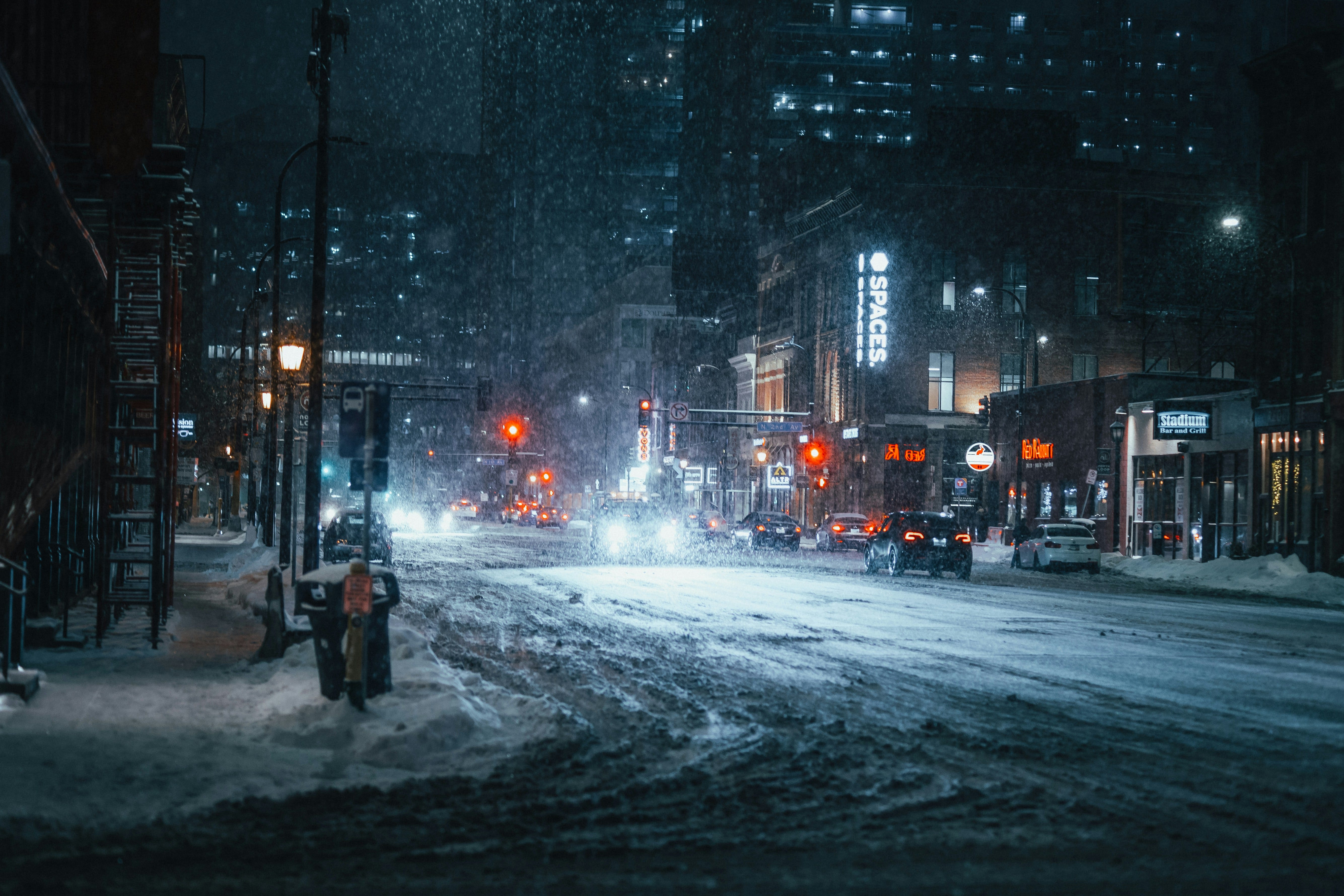
I tilt my head back and allow antibiotics to drop into my eye. I’m on day three of adjusting to a new lens and thrilled that, once I’ve wiped away the tears, I can see middle and long ranges. It’s only a matter of time before full sight is restored. What surprised me, though, was how long I had been losing it.
Sometime between the Covid lockdown and last year; the vision in my left eye slowly deteriorated. Change was so gradual, I was unaware of just how little I could distinguish with my left eye until I casually dropped by the optician in Zurich. Apparently, when sight slowly deteriorates, the brain adapts. It shifted the burden of perception to my right eye, compensated without complaint, and allowed me to move through the world as though nothing were wrong. I walked around blissfully unaware of what I was missing.
This is how people adapt to political decline, too. Nothing vanishes all at once, but edges soften, and we misjudge distances. Meanwhile, we adjust, trusting that things will not change too much.
I witnessed this when I visited Budapest for the first time in the mid-1980s to learn about Goulash Communism. The people I met were eager to explain to me how easy life had gotten after the government had loosened restrictions on ownership. Through a few sleights of hand, and as long as they stayed within the rules, life was comfortable enough. A friend of a friend explained this to me as we ate a sumptuous dinner at a restaurant meant for tourists in the Castle District. When I naively asked about all the restrictions on freedoms, he nervously glanced about the room and gave me his answer in a loud stage voice: There are no restrictions on freedom in the Hungarian People’s Republic. Everyone, he assured me, was happy as long as they followed the rules.
She shouldn’t have taunted ICE; he should not have brought a gun to a protest
That same logic now circulates in the United States of America. When ICE shot Renee Good in the face earlier this month, many pundits focused on her provocative behavior. They noted that she and her wife should not have been sassing the ICE officer. They should not have called him “Big Boy.” They should not have talked back.
When Border Patrol agents killed Alex Pretti at point blank range after an officer discovered a loaded gun in his back pocket, Homeland Security officials explained clearly that anyone who brings a loaded weapon to a protest should expect to be shot.
When Julio Cesar Sosa-Celis ran from ICE officers during a traffic stop, it seemed self- evident to many that stopping him with a bullet to the leg was a reasonable way to prevent escape.
Each story ends the same way. Violence is regrettable but ultimately inevitable, even justified because people did not behave. If the person had been polite; if only they had complied, they’d still be alive. Citizens, not officers, must exercise restraint.
In a rules-based system, enforcement actions have clear legal standards and oversight. Lethal force by agents is rare and always subject to independent review. In Minneapolis, though, federal authorities are investigating Good and her wife, rather than the shooter. And there is no word, yet, on whether they will share evidence - like Pretti’s own camera footage - with local law enforcement. Rather than being held accountable, ICE and Border Patrol officials seem to be immune from any restraints on their actions. Where we once had checks and balances, there appear now to be none. As Hannah Arendt warned, the danger is not lawlessness, but the normalization of arbitrary power.
Just as that Hungarian once told me, we now reassure ourselves that all is well under authoritarian conditions. Bad things only happen to those who deserve it. We believe we are safe because when officers pull us over, we will not run away or talk back or carry a weapon. We alter our routes to avoid areas where federal officers are conducting raids. We smile at the officers rather than whistle. We keep our heads down and look away. If we are white, straight, natural-born Americans, we have nothing to worry about.
Or, if we are not, then we learn to survive by lying low and staying quiet.
I can continue to live when I behave.
If I am obedient, I can be left in peace.
Being compliant doesn’t just feel safe. It is convenient. It provides a sense of normalcy as those of us outside of Minnesota continue to live our lives. This is why my middle distance vision felt sufficient. The system still worked, kind of.
Don’t poke the bear. Eastern Europeans once believed the beast was Russian. Now it has morphed to fit an American figure, but most of us still can’t really believe it. We feel outrage at what is happening in Minneapolis because we aren’t used to this costume parade.
This is the moral ethos of autocracy. Power becomes arbitrary and obedience is framed as protection. Authorities say they keep us safe from the worst of the worst. We don’t want criminals to run rampant; everyone agrees. We just are having a hard time seeing that Kristi Noem and Pam Bondi, JD Vance and Gregory Bovino are changing the definition of criminal.
Now laws, no matter how whimsical or nonsensical they seem, are changing. It’s up to us to keep pace. The Iranian government may gun down the woman who dares to shake her hair in the cool wind of a Teheran day. Just like the U.S. government sanctions the murder of a man holding up a phone and recording officers at work. In both cases, the conclusion is clear: They brought this on themselves. She should have known better; he put himself in that situation. The U.S. today is not yet Hungary of the late 1980s; nor is it in the same league as the Ayatollahs. But the tilt on that slope is getting steeper simply because the U.S. appears to increasingly tolerate the whims of Donald Trump and his cohorts alongside normative laws. Where departments once expressed regret and promised review, officials now frame bystanders as threats and shootings as self-defense before any investigation has begun. When the same authority that uses force also controls the investigation, the law ceases to be meaningful.
Once we believed protest and dissent were rights. Yes, they have always been unevenly protected and inconsistently enforced, but they were recognized as legitimate. Civil rights marchers, anti-war protesters, citizens filming police have always been controversial. The state might harass, arrest or worse. But the principle that citizens could challenge power remained embedded in our legal framework. Now, though, we learn these actions are dangerous. They provoke violence.
When the head of Customs and Border Patrol, explained Alex Pretti’s shooting, Greg Bovino made the new logic explicit. According to Politico, Bovino insisted the real victims were the border patrol agents. Pretti had “injected” himself into a federal law enforcement operation and was “more than likely” on the scene to assault officers. So we learn that the shooting of a bystander was not only acceptable but inevitable. In other words, we reclassify extra legal actions as self-defense. We hear only justifications, laws that apply to officials and protestors alike are missing.
This is what it feels like to slowly lose sight. Rights disappear incrementally. Norms shift just enough each day so that the mind adjusts. The branches blur into the trees and the trees meld into a green forest blob. And we tell ourselves this is what our world looks like. After a while, we forget what it is supposed to be. Nothing seems to have been lost. Only later do we realize how much we can no longer see.
i recently had a similar vision issue in my right eye so your writing immediately resonated with me on this and reality of life today. thanks for sharing.
On the other hand, in a bizarre twist of fate, because of our gun fetish, now even the NRA (!) is pushing back, calling out the regime's lies.